
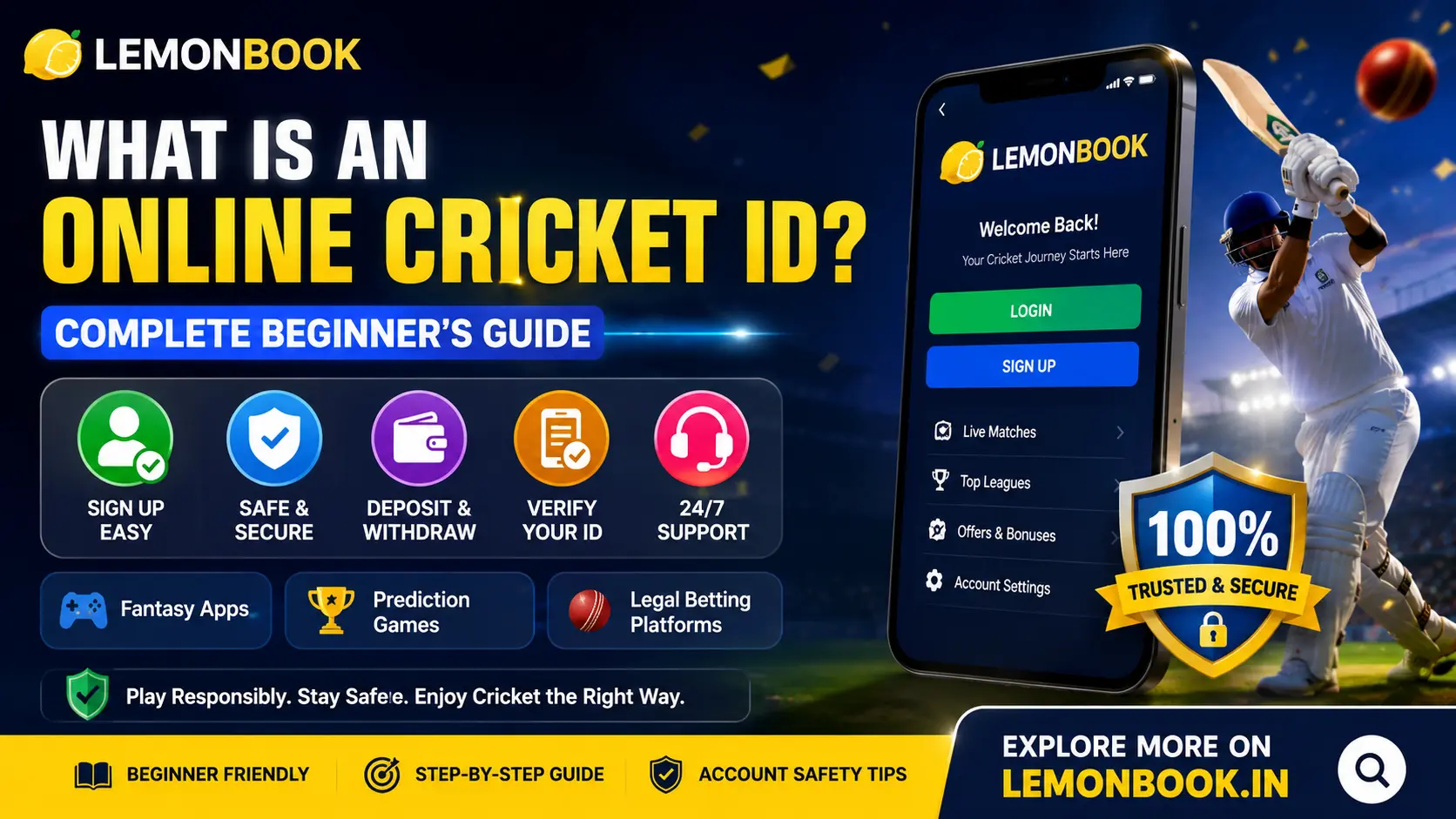
An online cricket ID is a login account for a cricket betting site or app. You use it to see live odds, place bets, and manage your wallet. Think of it as your key to the platform.
Many people search for a cricket betting ID before big events like the IPL or a T20 World Cup. Most of them want the same things. They want to know how it works, whether it’s legal, and how to avoid fake sites.
This guide answers all three in plain words.
An online cricket ID is a user account on a betting platform. It holds your name, contact details, and wallet balance. Once you log in, you can browse matches, check odds, and place wagers.
Some people call it a cricket betting ID. Others say online betting ID or exchange ID. The idea is the same. One account gives you access to one platform—whether you are looking at independent apps or established names like Lemonbook.
Most of them want the same things. They want to know how it works, whether it’s legal, and how to avoid fake sites, which you can read more about in this comprehensive cricket betting ID guide.
The process is simple.
You sign up on a site or app.
You confirm your identity.
You add money to your wallet.
You pick a match and a market.
You place a bet at the listed odds.
Wins go back to your wallet. You can then request a withdrawal.
These terms overlap, but they are not identical.
A cricket ID usually means an account focused on cricket markets. A betting ID can cover many sports, plus casino games. An exchange ID is for betting exchanges. There, you bet against other users instead of against the site.
An ID provider is a person or company that offers access to a betting platform. Some are the platform itself. Others are middlemen or agents. This is where most problems begin, which we cover below.
This is the most important question. The honest answer is that it is complicated, and the rules have tightened.
National level. India passed the Promotion and Regulation of Online Gaming Act in 2025. It restricts online money games, including many forms of real-money betting. Rules and court cases keep evolving, so check current law before you play.
State level. Betting laws also differ by state. Some states ban it fully. Others have older gambling acts that apply online. Always check your own state’s rules.
Licensed vs. offshore sites. Many platforms that sell cricket IDs run from outside India. They may hold a foreign license, or none at all. A foreign license does not make a site legal for Indian users. It also means you may have little protection if something goes wrong.
Tax. Winnings from games and betting can be taxed in India. If you win, speak to a tax professional.
Please note: This page is for information only. It is not legal advice. Laws change, so check with a qualified lawyer if you are unsure.
If you are in a place where this is allowed, the sign-up flow is usually the same across platforms.
Do not rely on a random WhatsApp message or social media ad claiming instant registration for brands like Lemonbook or others. Look for a real company name, a working website, and a clear terms page—as outlined in this complete guide to trusted and secure betting. Read reviews from several sources.
You will usually give your name, mobile number, and email. You will also set a strong password. Use a password you do not use anywhere else.
KYC means “know your customer.” Trusted platforms ask for ID proof and a selfie. Some ask for address proof too. This protects you and the site from fraud.
Turn on two-factor login if it is offered. Never share your OTP with anyone. Never share your password, even with “support” staff.
Use payment methods in your own name, like UPI or a bank transfer. Start with a small amount. Test a withdrawal early.
Many ads promise a cricket ID in two minutes with no KYC. That sounds convenient. It is also how many scams work. A real platform needs to verify who you are. If a site skips every check, ask yourself why.
Scams are common in this space, and knowing how to spot fake online ID providers is crucial before sharing any personal information. Here is what to watch for
No company details. No address, no license number, no real contact page.
Pressure to pay fast. “Deposit now or lose the offer” is a classic trick.
Payments to personal accounts. If you are asked to send money to a stranger’s UPI instead of an official gateway (like a verified Lemonbook merchant or automated system), stop.
Withdrawal excuses. Sudden “tax,” “verification fee,” or “clearance charge” demands before you can cash out.
Only chat contact. If the only support is a private chat number, be careful.
Too-good bonuses. Huge deposit bonuses often hide strict terms.
Quick safety check: search the provider’s name with words like “withdrawal problem” or “scam.” Read what real users say.
Reliable platforms tend to share a few traits.
Wide match coverage. This includes the IPL, international Tests, ODIs, T20s, and domestic leagues.
Live betting. In-play markets update ball by ball. You can bet on the next over, the next wicket, or the final result.
Clear odds. Odds should be easy to read. Good sites explain how each market works.
Fair terms. Rules for bonuses, limits, and withdrawals should be easy to find.
Real support. You should be able to reach a human through email, chat, or a help center.
Strong security. Look for secure login and encrypted connections.
New to cricket betting? These are the most common markets.
Match winner. Pick which team wins.
Top batter or top bowler. Pick the best performer in a match.
Total runs. Bet on whether the score goes over or under a set number.
Session and over markets. Bet on runs scored in a set group of overs.
Toss winner. A simple call on who wins the toss.
Player props. Bets on one player’s stats, like sixes or wickets.
Odds show how likely an outcome is and how much you can win. Lower odds mean a likelier result and a smaller payout. Higher odds mean a riskier result and a bigger payout. Understanding odds is the first skill every bettor needs.
Most users pay with UPI, bank transfer, or a digital wallet. Always use accounts in your own name. Mismatched names can cause blocked withdrawals.
Withdrawal times vary. Some sites pay within hours. Others take several days. Check the limits and fees before you deposit.
A good habit is to withdraw a small win early. It shows you how the process really works.
We want to be direct about this.
You can lose money. Betting is not income. Most people lose over time.
Your data is at risk. Sharing ID documents with unknown sites can lead to identity theft.
Accounts can be frozen. Offshore or unlicensed sites can lock your account. You may have no way to appeal.
Legal trouble is possible. Depending on where you live, betting may break local law.
Addiction is real. Gambling can harm your health, work, and family.
You bet more than you planned.
You chase losses.
You hide your betting from family.
You borrow money to play.
You feel stressed or low when you can’t bet.
If this sounds familiar, take a break. Talk to someone you trust, or reach out to a local counseling or helpline service.
Set a firm budget before you start. Treat it as money already spent.
Set a time limit for each session.
Never bet money you need for bills, rent, or food.
Do not chase losses.
Use self-exclusion tools if a platform offers them.
Only play if you are 18 or older and it is legal where you live.
You don’t need to bet to enjoy the game. Here are some low-risk options.
Join free prediction games with no cash stakes.
Follow match stats, player form, and pitch reports.
Play cricket fantasy formats that are legal in your area.
Watch with friends and keep a score of who called it right.
It depends on current national law and your state’s rules. Many forms of real-money online gaming are restricted. Check local law before you sign up.
On trusted platforms, sign-up is quick, but KYC can take hours or days. Be wary of any provider promising an ID in minutes with no checks.
Usually a government ID, a selfie, and sometimes proof of address. Only share these with a verified, trusted company.
Look for missing company details, payments to personal accounts, pressure tactics, and withdrawal fees. Search for user complaints first.
Only on a genuine platform, and only to an account in your own name. Test with a small withdrawal first.
Contact the platform’s official support in writing. Keep screenshots. If you suspect fraud, report it to the cyber crime portal or your local police.
An online cricket ID can look like a quick way to join the action. But the details matter. Laws are strict, scams are common, and losses are real.
Before you create any account, check the law in your state. Verify the platform—whether browsing standard exchanges or portals like Lemonbook. Protect your personal data. Set a budget you can afford to lose.
Cricket is best when it’s fun. Keep it that way.
Disclaimer: This content is for information only. It does not promote or endorse any betting platform (including Lemonbook or others). Betting involves financial risk. Play responsibly, and only if you are 18+ and it is legal where you live.
 1